Monday, November 26, 2007

Week 8: Online Applications and Tools

Welcome to Week 8! Just one more week of things left to explore. This week we will be exploring web based applications and becoming aware of the many award-winning web 2.0 tools that are currently available.

#18 Web-based Apps: They're not just for desktops


The availability and use of online productivity web-based applications (think word processing and spreadsheets) has exploded over the past two years and for good reasons! These powerful applications provide users with the ability to create and share documents over the internet without the need of installed desktop applications. Some experts speculate that this emerging trend may mean the death to Microsoft Office and other software-based productivity tools, while others think web-based applications have their place, but not in the office. But no matter which side of the office suite platform you side with, on this both sides seem to agree; web-based apps have their place.

One large benefit to web-based applications it that they eliminate the need to worry about different software versions or file types as you email documents or move from PC to PC. Another bonus is that they easy accommodate collaboration by allowing multiple users to edit the same file (with versioning) and provide users the ability to easily save and convert documents as multiple file types (including HTML and pdf). And, you can even use many of these tools, such as Zoho Writer and Google Docs* (formerly known as Writely) to author and publish posts to your blog. It’s this type of integration with other web 2.0 tools that also makes web-based apps so appealing.

With Zoho and web-based applications, the possibilities are endless.

Discovery Resources:

A short list of web-based productivity applications – Note: Helene Blowers authored this list in ZohoWriter and exported it as HTML.

Discovery Exercise:
  1. Create a free account for yourself in Zoho Writer.
  2. Explore the site and create a few test documents of two.
  3. Try out Zoho Writer’s features and create a blog post about your discoveries.

Optional: If you're up for the challenge, try using Zoho’s "publish" options to post to your blog.* Note: You can also explore Google Docs (formerly known as Writely), Google's online word processer, as an option for this exercise. On Oct 11th, 2006 Google relaunched Writely (which it acquired in Spring 2006) as Google Docs.

BTW: Here’s a document (viewable as a webpage) Helene Blowers mocked up in Zoho about some of the features she found beneficial.

#19 Discovering Web 2.0 tools

Throughout the course of this Learning 2.0 program we’ve explored just a small sampling of these new internet technologies and websites that are empowering users with the ability to create and share content. But given time there are so many more we could explore. Past estimates have placed the number of web 2.0 tools at somewhere between 300 & 500 with only a handful emerging as market dominators. And although time will only tell which of these collaborative, social networking and information tools will remain on top, one thing is for sure, they're not going to go away (at least anytime soon).

For this discovery exercise, participants are asked to select any site from this list of Web 2.0 Awards nominees and explore it. With so many to choose from, it might be handy to first select a category that interests you (like Books or Personal Organization) and then simply select a tool/site to explore. Be careful to select a tool that is Free and that doesn't require a plug-in or download. The majority of these are free, so this shouldn’t be a problem.

Discovery Exercise:

  1. Select any site/tool from the list of Web 2.0 Awards nominees. (If you prefer to select from just the winners, here’s a link to the short list.)
  2. Explore the site you selected.
  3. Create a post about your discovery. What did you like or dislike about the tool? What were the site’s useful features? Could you see any applications for its use in a library setting?Web 2.0 – with so much to explore, just start with ONE. :)

Monday, November 19, 2007

Week 7

#16 So what’s in a wiki?

A wiki is a collaborative website and authoring tool that allows users to easily add, remove and edit content. Wikipedia, the online open-community encyclopedia, is the largest and perhaps the most well known of these knowledge sharing tools. With the benefits that wikis provide the use and popularity of these tools is exploding.
  • Anyone (registered or unregistered, if unrestricted) can add, edit or delete content.
  • Tracking tools within wikis allow you to easily keep up on what been changed and by whom.
  • Earlier versions of a page can be viewed and reinstated when needed.
  • And users do not need to know HTML in order to apply styles to text or add and edit content. In most cases simple syntax structure is used.


As the use of wikis has grown over the last few years, libraries all over the country have begun to use them to collaborate and share knowledge. Among their applications are pathfinder or subject guide wikis, book review wikis, ALA conference wikis and even library best practices wikis.

Discovery Resources:

Use these resources to learn more aboout wikis:

Discovery Exercise:
1. For this discovery exercise, you are asked to take a look at some library wikis and blog about your finding. Here are a few examples to investigate:


2. So what's in a wiki? Find out by doing some exploring on your own.


3. Create a blog post about your findings. What did you find interesting? What applications within libraries might work well with a wiki?

#17 Playing with a wiki

Now that you know what they are, play with a wiki a little bit. We have created our very own wiki sandbox for you to play in at http://spokpl20.pbwiki.com/

FYI, Spokane Public Library is investigating a wiki to manage SPLASH and the Intranet content. Watch Weekly News for more information on this project.

Monday, November 5, 2007

Week 6: Tagging, Folksonomies & Technorati

This week, in addition to exploring Technorati tagging, we want to also take A LOOK at popular social bookmarking site called Del.icio.us (typed in as http://del.icio.us/).


#13 Tagging, folksomonies & social bookmarking in Del.icio.us
Tagging is an open and informal method of categorizing that allows users to associate keywords with online content (webpages, pictures & posts). Unlike library subject cataloging, which follows a strict set of guidelines (i.e.Library of Congress subject headings), tagging is completely unstructured and freeform, allowing users to create connections between data anyway they want.

In the past few weeks, we’ve already explored a few sites – Flicker and LibraryThing to name two --that allow users to take advantage of tagging and in week 3 many even used a common tag (SPL2.0) to create an association between photos that we individually uploaded. This week, in addition to exploring Technorati tagging, we want to also take at popular social bookmarking site called Del.icio.us (typed in as http://del.icio.us/).

Del.icio.us is a social bookmarking manager which allows you to bookmark a web page and add tags to categorize your bookmarks.

Many users find that the real power of Del.icio.us is in the social network aspect, which allows you to see how other users have tagged similar links and also discover other websites that may be of interest to you. You can think of it as peering into another users’ filing cabinet, but with this powerful bookmarking tool each user's filing cabinet helps to build an expansive knowledge network.

For this discovery exercise, you are asked to take a look at Del.icio.us and learn about this popular bookmarking tool.


Discovery Resources:

Discovery Exercise:

View the 8 minute Del.icio.us tutorial to get a good overview of its features.

  • Take a look around Del.icio.us using the PLCMCL2 account that was created for this exercise. Note: In this account you will find lots of resources that have been highlighted or used throughout the course of the Learning 2.0 program.
  • Explore the site options and try clicking on a bookmark that has also been bookmarked by a lot of other users. Can you see the comments they added about this bookmark or the tags that they used to categorize this reference?
  • Create a blog post about your experience and thoughts about this tool. Can you see the potential of this tool for research assistance? Or just as an easy way to create bookmarks that can be accessed from anywhere?
  • OPTIONAL: If you’re up to the challenge, create a Del.icio.us account for yourself and discover how this useful bookmarking tool can replace your traditional browser bookmark list.

    Note: If you do setup a Del.icio.us account, here’s a quick word about the Del.icio.us Buttons. On PCs that have the toolbars locked down, these will install as options in your browser bookmarks. Use the “Post to my Del.icio.us” link to add the current webpage to your account (you may need to log in). Use the “My Del.icio.us” link to view your online account.

    #14 Getting not-so-technical with Technorati

    So now that you’ve been blogging for awhile, you might be wondering just how big the blogosphere is. Well, according to Technorati, the leading search tool and authority for blogs, the number of blogs doubles just about every 6 months with over 51 million blogs currently being tracked by the site. If the blogging trend continues, it is estimated that Technorati will have tracked its 100 millionth blog in just 5 months.

    Yes, these numbers are astounding, but as you’ve already seen for yourselves, blogging is so easy that these publishing tools are being taken advantage of by almost every industry, including libraries.

    So how does a person get their blog listed as part of the blogosphere and how can you tag your posts with keywords to make them more findable through a Technorati search? The answer to the first question is that your blog is probably already being captured by Technorati due to the fact that you're already using Blogger, the most popular blogging tool. But if you want to join the party and have your blog officially listed on Technorati and also take advantage of the watchlist and other features, you’ll need to claim your blog yourself. As for tagging posts with Technorati tags? This is easy, too. All you need to do is add a little bit of HTML code to the bottom of your post (see my example below) and Technorati will pick up these tags when it spiders (or web crawls) your site.

    Technorati Profile

    You can search for keywords in blog posts, search for entire blog posts that have been tagged with a certain keyword, or search for blogs that have been registered and tagged as whole blogs about a certain subject (like photography or libraries).

    Discovery Resources:

    Technorati Tour – videocast of new features & new look
    Technorati Discover & Popular features

    Discovery Exercise:

    Take a look at Technorati and try doing a keyword search for “Learning 2.0” in Blog posts, in tags and in the Blog Directory. Are the results different?


  • Explore popular blog, searches and tags. Is anything interesting or surprising in your results?
  • Create a blog post about your discoveries on this site.
  • OPTIONAL: If you're up for a challenge, learn how to tag your posts with Technorati tags so they can join tag searches. Create a post about something. It can be anything you want and add the HTML code to the bottom to tag it as “SPL2.” You may also want to consider claiming your blog and creating a watchlist.

    NOTE: When adding HTML code, you'll want to make sure you're in Blogger's Edit HTML window.

    There's a lot to explore.

    #15 On Library 2.0 & Web 2.0 ...

    Library 2.0 is term used to describe a new set of concepts for developing and delivering library services. The name, as you may guess, is an extension of Web2.0 and shares many of its same philosophies and concepts including harnessing the user in both design and implementation of services, embracing constant change as a development cycle over the traditional notion of upgrades, and reworking library services to meet the users in their space, as opposed to ours (libraries).

    Many have argued that the notion of Library 2.0 is more than just a term used to describe concepts that merely revolve around the use of technology; it also a term that can be used to describe both physical and mindset changes that are occurring within libraries to make our spaces and services more user-centric and inviting. Others within the profession have asserted that libraries have always been 2.0: collaborative, customer friendly and welcoming. But no matter which side of the debate proponents fall, both sides agree that libraries of tomorrow, even five or ten years from now, will look substantially different from libraries today.

    Discovery Resources:

    OCLC Next Space Newsletter – Web 2.0: Where will the next generation of the web take libraries?

    Five Perspectives:

    Wikipedia – Library 2.0

    Library 2.0 Discussions (list of great references from Wikipedia)

    Discovery Exercise:

    1. Read two or three of the perspectives on Library 2.0 from the list above.
    2. Create a blog post about your thoughts on any one of these? Library 2.0 - It's many things to many people. What does it mean to you, and what does it mean for Spokane Public Library?


    Friday, October 26, 2007

    Week 5

    Thing #10 - Play around with Image Generators


    Generators? No, I’m not talking about those gas powered back-up things. The generators I’m talking about allow you to easily manipulate image and graphics to create fun images.

    For this discovery exercise, I just want you to have fun. Find a few fun image or text generators to play around with and write a post in your blog about one of your favorites and display the result. Often adding the image you mocked up to your blog is as simple as copying and pasting code that the page provides. If not, you may just need to right click on the image and then save it to your hard drive before using Blogger’s image button to add it to your post.

    If you’re having difficulty getting your image added to a post in your blog, ask a co-worker for help.

    Discovery Resources:

    The Generator Blog
    Letter James
    FD Toys

    Also try searching for online generators, text generators or image generators!

    Discovery Exercise:

    1. Play around with some image generators and find one that you like.

    2. Post the result of your discovery process in your blog.

    Note: Be sure to include a link to the image generator itself, so other participants can discover it too. So take some time and have fun with this exercise. And remember to be tasteful too!

    * For more fun, make sure to check out: Dummies Book Generator, FD Toys Magazine Cover, Comic Strip Generator.


    Thing #11 - A thing about LibraryThing

    Are you book lover or cataloger at heart? Or do you enjoy finding lost and forgotten gems on the shelf to read? Then LibraryThing may be just the tool for you. Developed for booklovers, this online tool not only allows you to easily create an online catalog of your own it also connects you to other people who have similar libraries and reading tastes. Add a book to your catalog by just entering the title -- It’s so easy that you don’t even need MARC record training to do it – or connect with other users through your similar reading tastes. There are lots of ways to use LibraryThing. You can even view your books on a virtual shelf, add a widget (see sidebar for sample) to display titles that are in your catalog or install a LT Search box on your blog.

    So why not join the ranks and create your own library online. With over 65,000 registered (BTW: LibraryThing also has group forum for librarians users and over 4.7 million cataloged books, you're bound to discover something new.

    Discovery Resources:
    About LibraryThing
    Library Thing tour
    MoBuzzTV Review (3rd story in the 5 min broadcast)
    LibraryThing blog (updates & news)

    Discovery Exercise:
    Take a look around LibraryThing and create an account.
    Add a least 5 books to your library.

    Blog about your findings and be sure to link to your LibraryThing catalog.

    Thing #12 - Roll your own search engine

    Do you have a group of websites that are your favorites? Or a set of online resources that are similar that you frequently use to answer homework or reference questions? Well Rollyo may be the tool for you. Rollyo allows you to create your own search tool for the just the websites you know and trust.

    Take a look at some of these search rolls that have already been created:
    Public Domain e-Books Search
    Rare Book Library Search
    Free Photos
    Quick Quotes
    Explore other rolls here.

    Discovery Exercise:
    Explore Rollyo and create an account for yourself.
    Create a search roll for any subject you like.
    Create a post in your blog about your experience and link to your search roll. Can you see a potential use for tools like this?

    OPTIONAL: Add your searchroll to your blog using the "Create a Searchbox" tool.

    Monday, October 22, 2007

    Week 4

    This week we are on to newsfeeds and rss. Both of these are great ways to stay informed on news, blogs and events. So off to things number 8 & 9!


    Thing #8 Make life "real simple" with RSS and a newsreader


    You’ve heard of RSS? You’ve seen those small funny tags on websites? You’ve heard co-workers and acquaintances swear by it, but still have no idea what RSS is? Well don’t worry, according to a recent survey you’re still in the majority, but this is changing rapidly. In the information world, RSS is not only revolutionalizing the way news, media and content creators share information, but it also is swiftly changing the way everyday users are consuming information.RSS stands for “Really Simple Syndication” and is a file format for delivering regularly updated information over the web. Just think about the websites and news information sources you visit every day. It takes time to visit those sites and scour the ad-filled and image-heavy pages for just the text you want to read, doesn’t it? Now imagine if you could visit all those information sources and web pages in just one place and all at the same time … without being bombarded with advertising… without having to search for new information on the page you’d already seen or read before… and without having to consume a lot of time visiting each site individually. Would that be valuable to you? Well, it’s available now through a newsreader and RSS.This week’s discovery exercises focus on learning about RSS news feeds and setting up a Bloglines account (a free online newsreader) for yourself to bring your feeds together.


    Resources:
    CNET Video: RSS – Feel the Need for Feeds (3:32) – a good over-view of what RSS is and the benefits to users.
    Feed Me: A gentle introduction to Internet feeds - a good tutorial from Palinet, a library cooperative
    Using Bloglines Tutorial (how to keep up with dozens of blogs everyday) – This online tutorial walks you through how to setup a Bloglines account and add newsfeeds. Follow Steps 1 to 3 to set up your Bloglines account. Steps 4 – 9 are optional and cover how to subscribe to different types of feeds (podcasts, Flickr albums, etc)
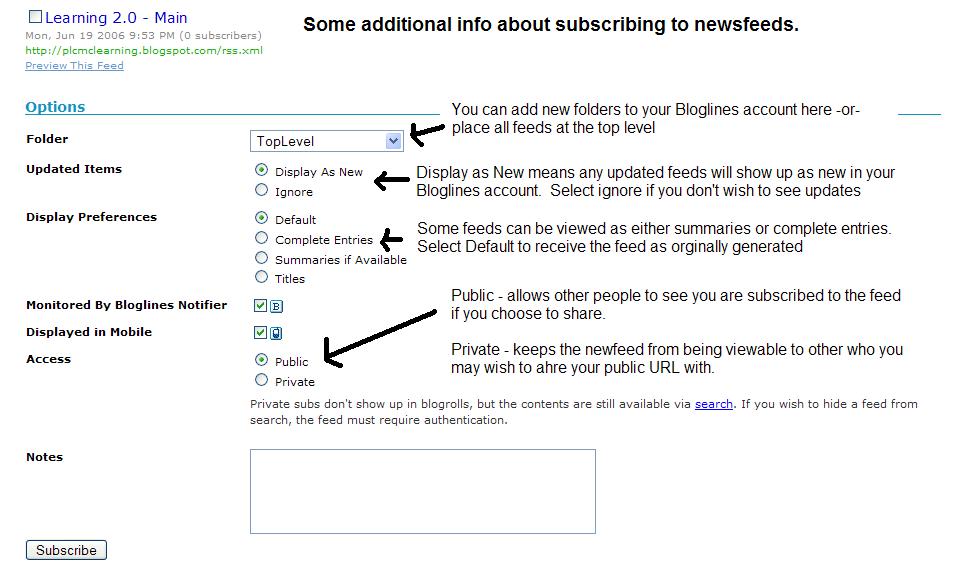
    Additional Bloglines news feed subcription information (screenshot image)
    Your co-workers - tap into their knowledge or work through your discovery process together.


    Exercise:
    Follow the discovery resources above to learn more about RSS and newsreaders.
    Create a free online Bloglines account for yourself and subscribe to at least 10 newsfeeds to your reader. See Using Bloglines Tutorial steps 1-3 for instructions.Newsfeeds:


    Create link to the Spokane Public Library 2.0 blog by typing the blog URL (spokpl20.blogspot.com)into the subscribe field in Bloglines. Try it, it's easy!
    Then try adding a few other types of news feeds from news sources
    (Select from the list below to subscribe to or find other sources)

    American Library Association website
    Library Jounral - The website for the magazine
    Unshelved - Library cartoon feed

    Create a post in your blog about this exercise. Optional: If you're up to the challenge, you can provide the URL address to your public bloglines account (find where to find this below)Don’t know what to blog about? Think about these questions:

    What do you like about RSS and newsreaders?
    How do you think you might be able to use this technology in your work or personal life?How can libraries use RSS or take advantage of this new technology?

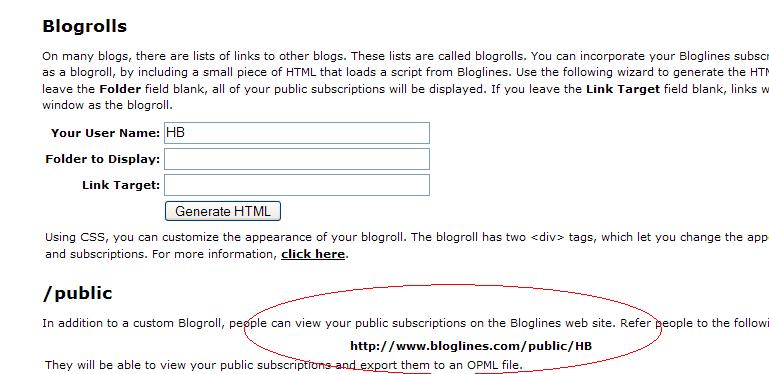
    How to find your public Bloglines URL:
    Click on the Share tab within your Bloglines account:
    Scroll down the right screen pane and locate the public URL (see screenshot)
    Be sure to add this as part of your post to demonstrate your completion of this activity.


    Thing #9 Finding Feeds


    Now that you have a newsreader (your Bloglines account), you can begin adding other newsfeeds that interest you. There are several ways you can locate newsfeeds:
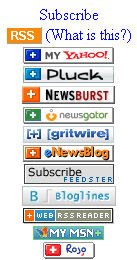
    When visiting your favorite websites -- look for news feed icons that indicate the website provides it. Often a feed icon will be displayed somewhere in the navigation bar of the site. (Here's an image that contains a sampling of several feed icons).
    Use Blogline's Search tool - Bloglines recently expanded search tool lets you search for news feeds in addition to posts, citations and the web. Use the Search for Feeds option to locate RSS feeds you might be interested in.
    Other Search tools that can help you find feeds:
    Feedster - One of the largest collections of RSS feeds, Feedster lets you search for feeds in three categories: news, blogs & podcasts
    Topix.net - This search tool allows you to locate recent newsfeed items based upon keyword or phrase searching. The tool focuses specifically on news and media outlet RSS feeds for information, not weblogs.
    Syndic8.com - Syndic8 is an open directory of RSS feeds that contains thousands of RSS feeds that users have submitted.
    Technorati - Technorati is a popular blog finding tool that lets you search for blogs. Since RSS feeds are inherent to all blogging tools, Technorati Blog Search can help you find RSS feeds for topic specific blogs you may be interested in. Additonal Resource: Technorati Tutorial on finding and adding your blogDiscovery Excercise:
    Explore some of the search tools noted above that can help you locate some news feeds.
    Create a blog post about your experience. Don't know what to blog about? Here some questions to think about ...

    Which method of finding feeds did you find easiest to use?
    Which Search tool was the easiest for you?
    Which was more confusing?
    What kind of useful feeds did you find in your travels?
    Or what kind of unusual ones did you find?
    What other tools or ways did you find to locate newsfeeds?


    PS: Once you tackle this discovery exercise, you've tackled the most difficult one of the whole 23. :)

    Monday, October 15, 2007

    Week 3.5


    We have heard from many of you that there just wasn't nearly enough time to complete week three's tasks, so we have declared this week 3.5. If you haven't yet started, there is still plenty of time to sign up and complete all 23 things between now and the end of the year. Last week the Friends of the Library agreed to fund the purchase of USB flash drives for each eligible Spokane Public Library staff member who completes the program, watch this space for more information about that. Have fun and be sure to take a look at the other participant blogs to see what your colleagues are doing.

    Saturday, October 6, 2007

    Week 3: Photos and Images


    Thing #5: Discover Flickr

    Photo sharing websites have been around since the 90s, but it took a small startup site called Flickr to catapult the idea of “sharing” into a full blown online community. Within the past year, Flickr has become the fastest growing photo sharing site on the web and is known as one of the first websites to use keyword “tags” to create associations and connections between photos and users of the site.

    For this discovery exercise, you are asked to take a good look at Flickr and discover what this site has to offer. Find out how tags work, what groups are, and all the neat things that people and other libraries are using Flickr for.


    Discovery Exercise:

    In this discovery exercise, you have two options…


    1. Take a good look around Flickr and discover an interesting image that you want to blog about. Be sure to include either a link to the image or, if you create a Flickr account, you can use Flickr's blogging tool to add the image in your post. Another option you have for including images in your post is to use Blogger's photo upload tool. Netiquette alert: Even if the photo has a "blog this" icon above their photo, (See this photo to get an idea of what I mean) it is still a nice idea to tell the photo's owner that you are posting it in your blog post. Send the person a message (you can do this by clicking on the person's profile) or post a comment on the picture. It is also nice to provide the person with the link to your post, too.

      -- OR --


    2. If you're up to an easy challenge ... create a Free account in Flickr and use a digital camera to capture a few pictures of something in your branch. Upload these to your Flickr account and tag at least one of the images “SPL2.0” and mark it public. Then create a post in your blog about your photo and experience. Be sure to include the image in your post. Once you have a Flickr account, you have two options for doing this: through Flickr's blogging tool or using Blogger's photo upload feature.


    So go ahead, explore the site and have some Flickr photo fun and if you're interested in looking at some photo hosting sites, then check out this Wired story.


    PS: A quick word about photo posting etiquette - When posting identifiable photos of other people (especially minors) is it advisable to get the person's permission before posting their photo in a publicly accessible place like Flickr. Never upload pictures that weren't taken by you (unless you have the photographer's consent) and always give credit when you include photos taken by someone else in your blog.


    P.P.S. The photo above is one that I took and have uploaded on Flickr. I used the Blogger Upload Feature to link to it from this post.


      Thing #6: More Flickr Fun
      Like many web 2.0 sites, Flickr has encouraged other people to build their own online applications using images found on the site. Through the use of APIs (application programming interfaces), many people have created third party tools and mashups* that use Flickr images. Here are just a sampling of a few …


      • Mappr - allows you to take Flickr images and paste them on a map


      • Flickr Color Pickr - lets you find public photos in Flickr that match a specific color.


      • Montagr – create a photo mosaic from photos found on Flickr.


      Discover more mashups, web apps, and Flickr tools.


      Discovery Exercise:
      Your discovery exercise for this “thing” is to:
      Explore some of the fun Flickr mashups and 3rd party tools that are out there.
      Create a blog post about one that intrigues you. A really fun tool is FD Toys’ Trading Card Maker. And there’s a ton of librarians out there that have created their own Librarian Trading Card. So have some fun discovering and exploring some neat little apps. And if you're up to the challenge while you’re at it, why not create a trading card of your own. :)


      *Mashup Note: Wikipedia offers some great articles that explain mashups. Basically they are hybrid web applications that take features from one application (like Flickr) and mash it up with another (like a map).
      In this example, you get Mappr (http://mappr.com/).


      Thing #7: Blog about Technology
      For this thing, simply blog about anything technology related. Yes, it can be anything that relates to technology! You just need to share a few thoughts." PS: Also be sure add at least one comment to another participant's blog. That's what online communities are all about - connecting and communication. :)


      To Review, Week Three Activities are:


      1. Explore Flickr and post a photo from Flickr on your blog.

      2. Play with a Flickr Mashup and create a blog post about one that interests you.

      3. Blog about anything technology related and comment on another participant's blog.

      Questions? Please feel free to ask in the comments section or e-mail one of the 2.0 committee members.


      Have fun!